
Atlas daemon
The platform itself: one Linux binary, CLI-first, driving the encrypted multi-link tunnel — from datacenter servers to a board weighing around 15 g.
The platformThe same Rust core runs on servers, field boards and phones; everything around it exists to deploy, observe and exercise it. This page is the map — the products, and the six public destinations they live behind.
Real screenshots throughout — from the shipped interfaces, not mockups.
The platform itself: one Linux binary, CLI-first, driving the encrypted multi-link tunnel — from datacenter servers to a board weighing around 15 g.
The platformServed by every node: links, live topology, scheduler decisions and traffic policy in a browser — no SSH, no CLI knowledge needed.
Linux tour — nexusatlas.appThe same engine on a phone: Wi-Fi + cellular bonded, gateway picker by measured latency, QR pairing, per-app routing, field toolkit. Evaluation builds.
Android tour — nexusatlas.appManaged reachability across carrier-grade NAT: relay-first connection, automatic direct upgrade, cryptographically signed relay directory, hosted exits in the EU and North America — plus private and hybrid relay estates.
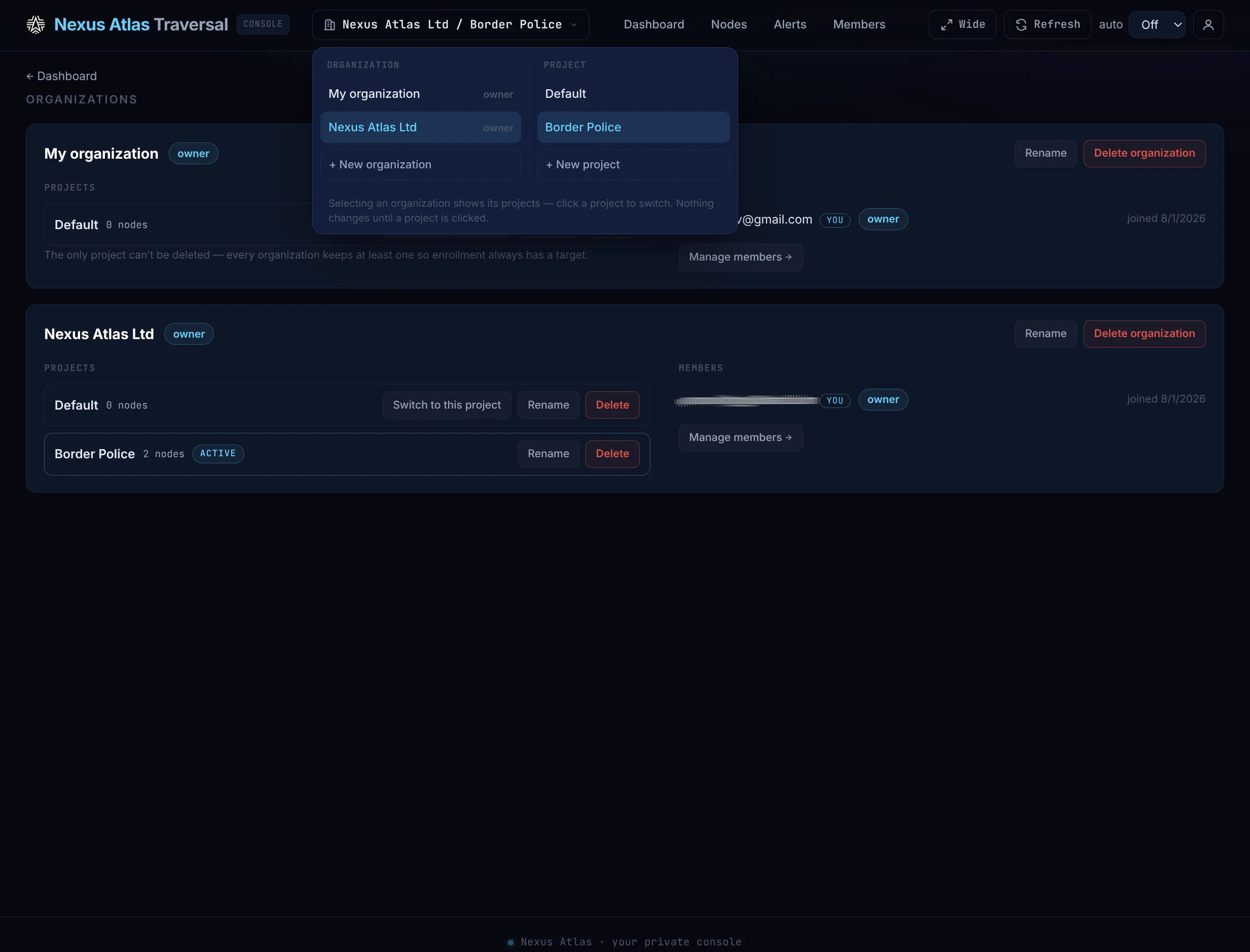
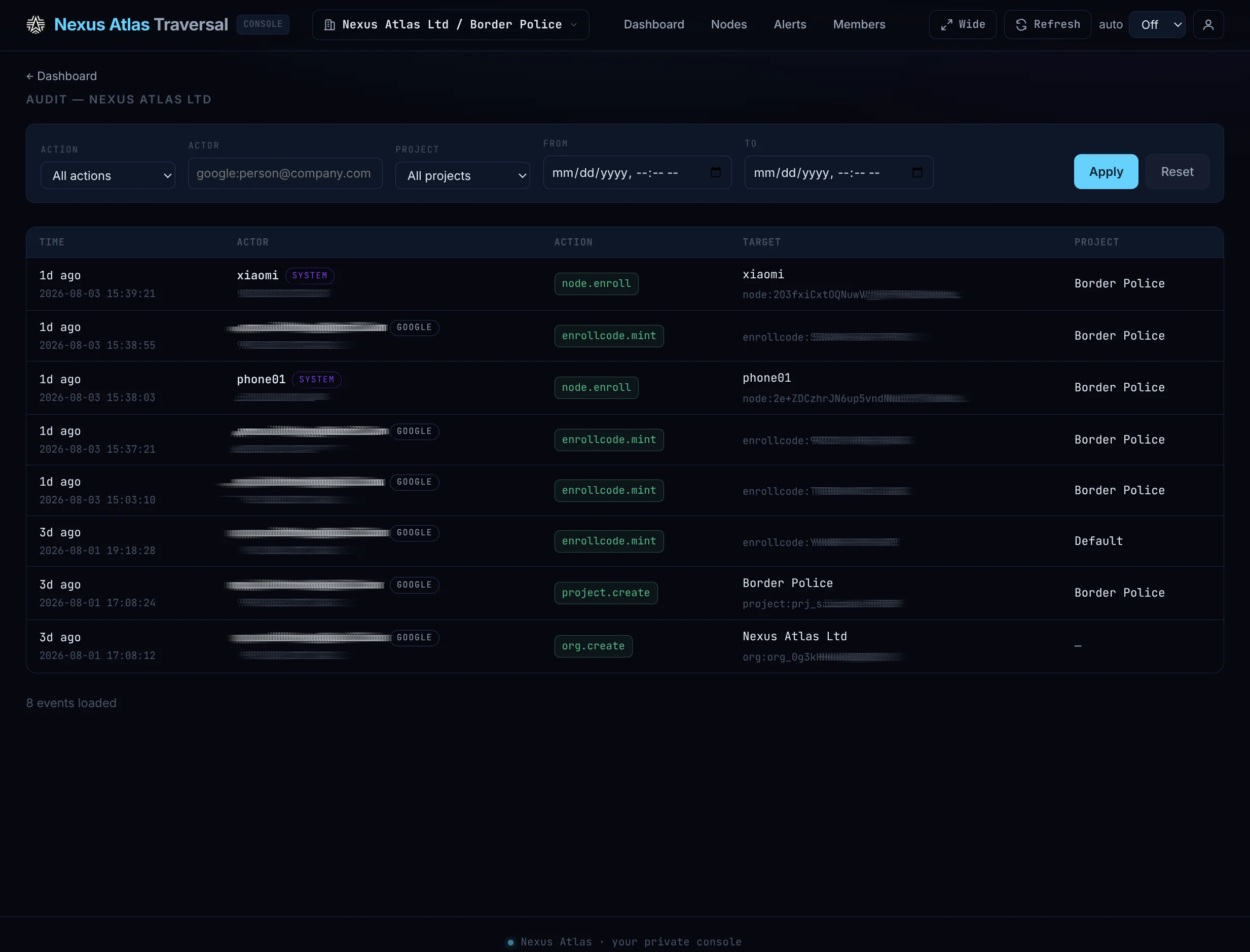
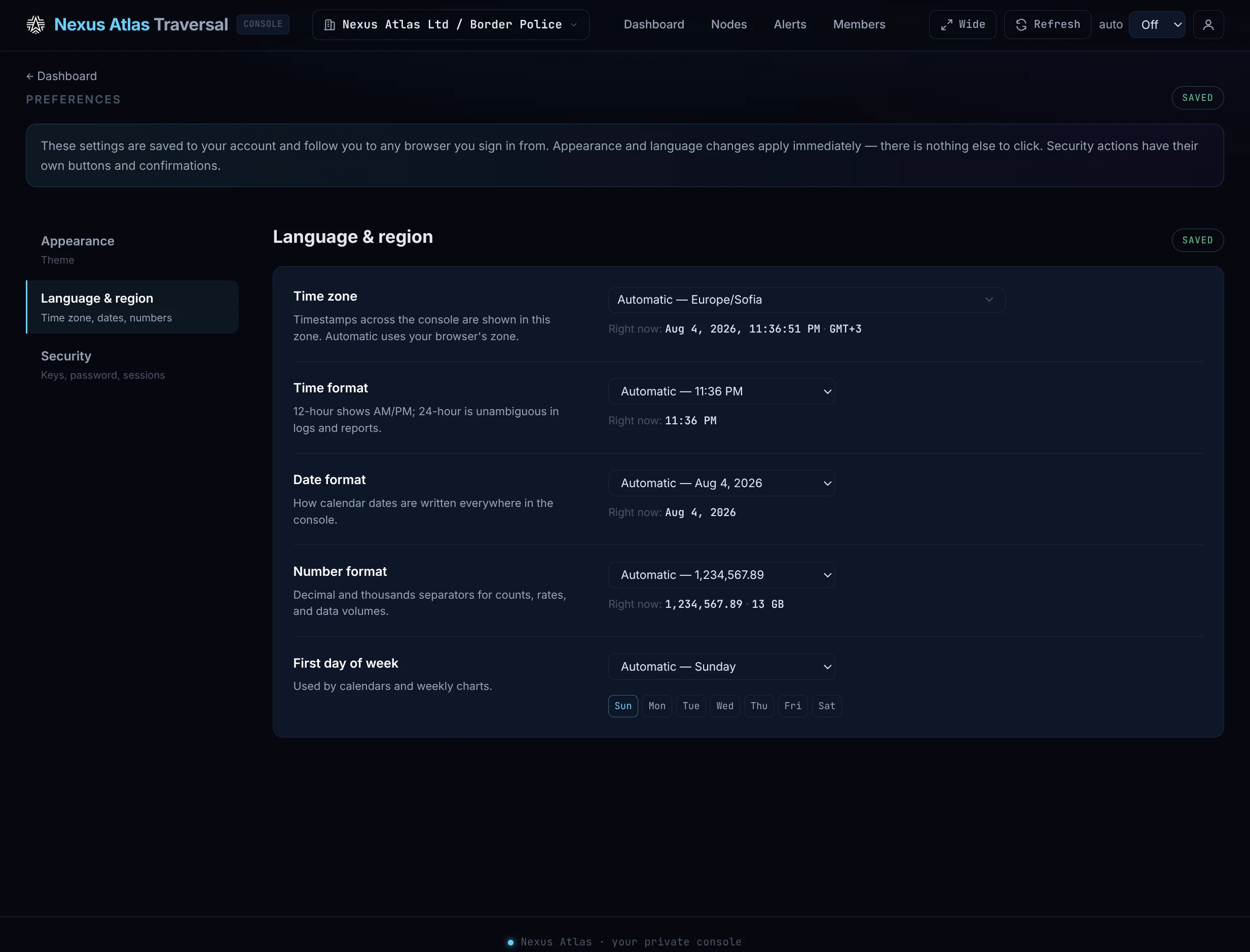
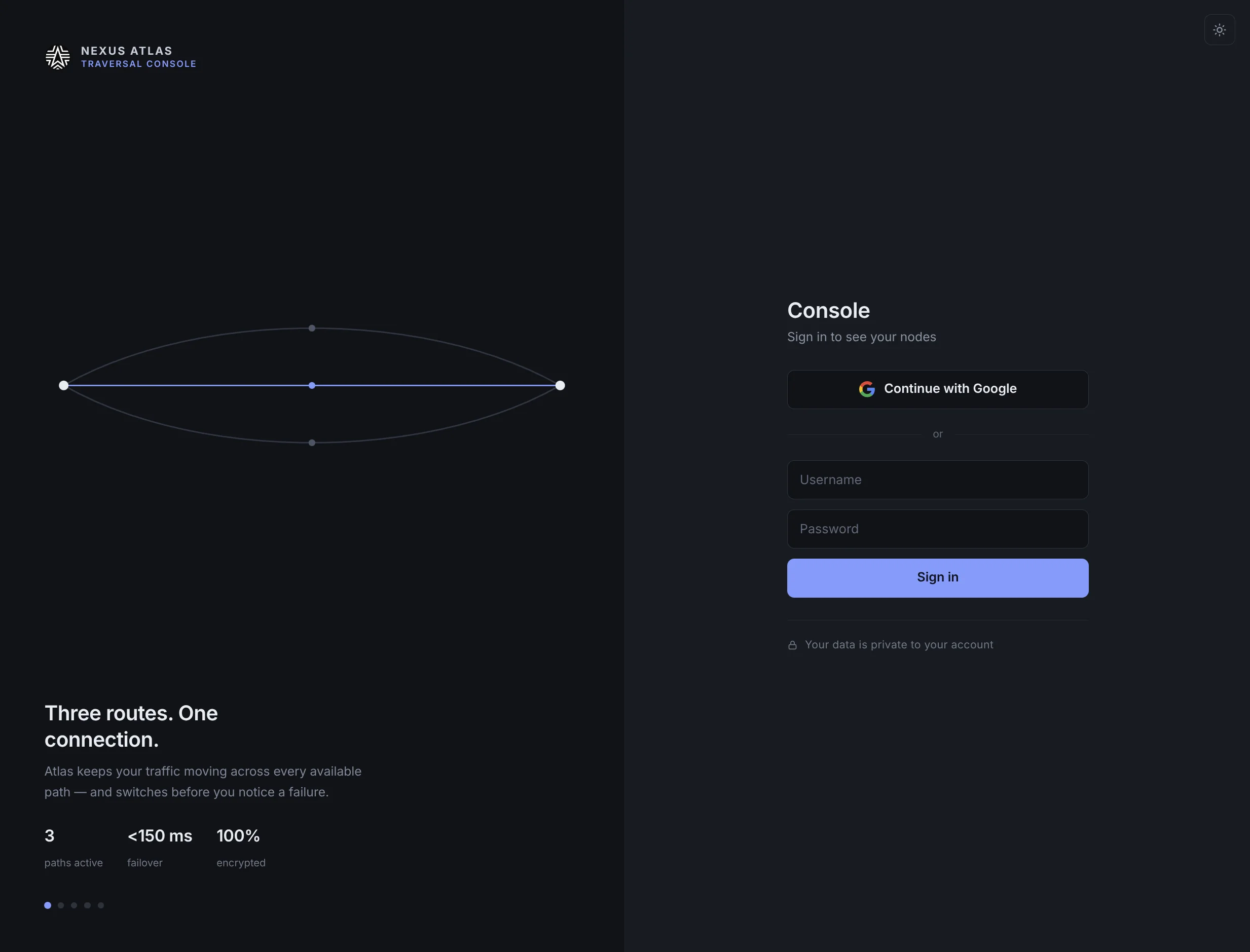
nexusatlas.netThe operations pane: cryptographic node enrolment, live map, per-link telemetry, offline alerts, organisations and roles, audit trail, hardware-key second factor.
console.nexusatlas.netThe mission simulator: the real mesh rendered over real elevation data, every link colored by terrain line-of-sight using the same mathematics as the product’s terrain engine — including a live digital-twin mode that mirrors a fielded mesh once a second.
The terrain research directionThe underlay viewer: live 802.11s radio topology from any node’s browser — signal strength, airtime metrics, dying links fading out early, one-click discovery of hidden multi-hop nodes, and a 3D view for wall displays.
Companion processes for radios that can talk back: serial telemetry radios, Wi-Fi, Ethernet and Bluetooth today. They split a radio’s byte stream into a data channel and a telemetry channel — and any hardware family can have one.
Adapters in depth — nexusatlas.ioAtlas exposes its own measurements and carries whatever the platform already runs. These three companions came out of our own drone work — they are not products you buy, but they show where the platform’s edges are and what integrating against it costs.
The network telling the camera what it can afford. It reads the daemon’s own per-second link statistics and steps the video profile down before the stream drowns the radio — full resolution while loss and latency stay low, progressively smaller as they don’t. It drops fast, recovers slowly, and treats a missing snapshot as the worst case, so a dead daemon can only make the picture safer.
Our drone camera through a vendor protocol; any other camera or encoder through a command hook.
The camera on the drone lives on the manufacturer’s own private network, reachable only from the aircraft. A tiny relay exposes its video stream across the tunnel to any client on the operations network — no address translation, no routing changes, nothing reconfigured on the vendor’s equipment. It is a small thing that makes a large point: adopting Atlas does not mean re-architecting the networks your equipment already came with.
An inertial sensor on a headset streams orientation over a short-range radio to a small program that calibrates it and fans it out — to a live 3D view for diagnostics, and to the drone’s gimbal, which follows the operator’s head. Purpose-built as a demonstration, not a product: it puts real-time control traffic on the bonded link in a form a visitor can feel, and it is usually the part of a briefing people remember.
Thirteen screens from the shipped web interface, in your theme — plus the full walkthrough. No agent and no collector: the daemon serves this itself, from the same numbers the CLI returns.
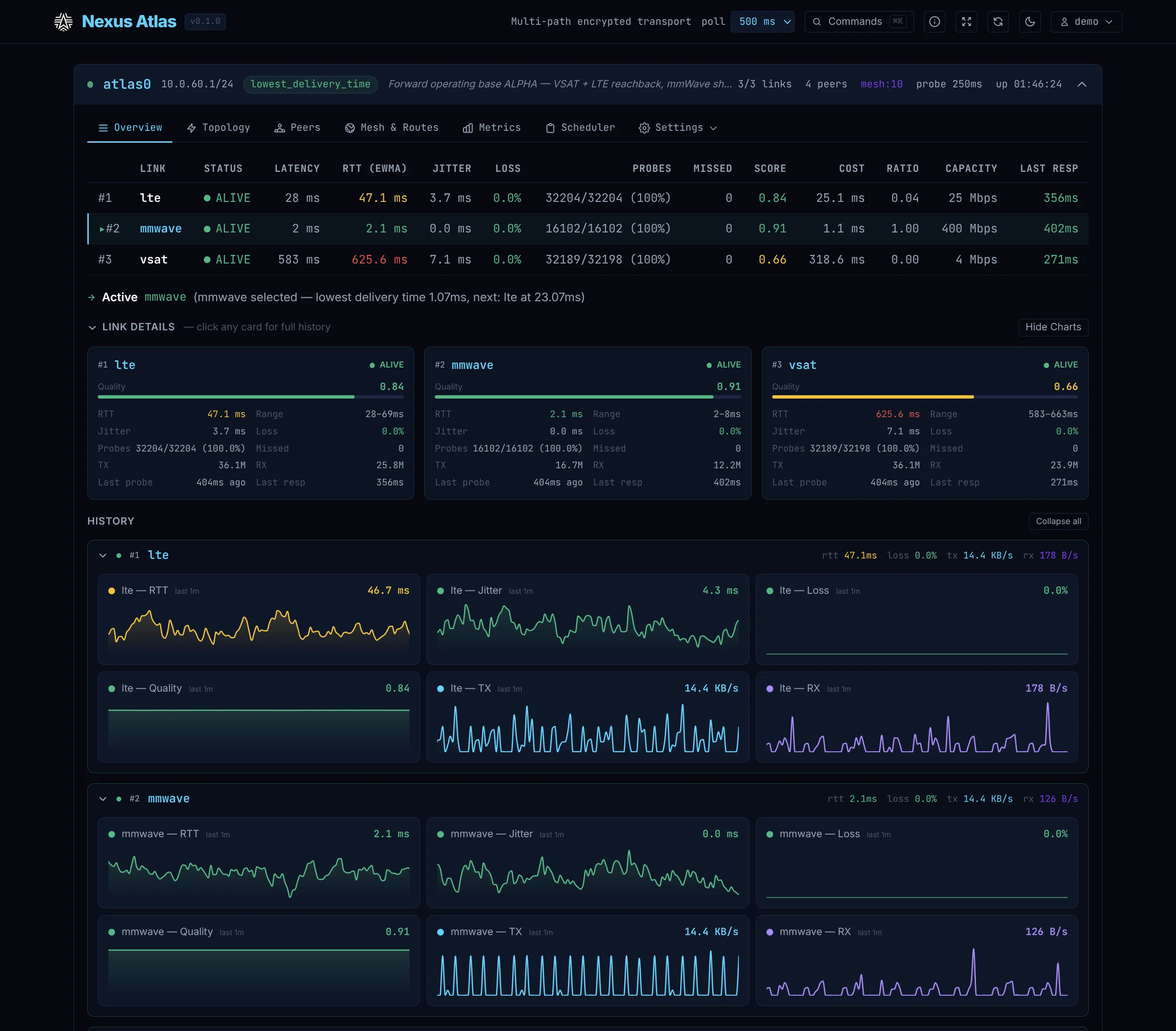
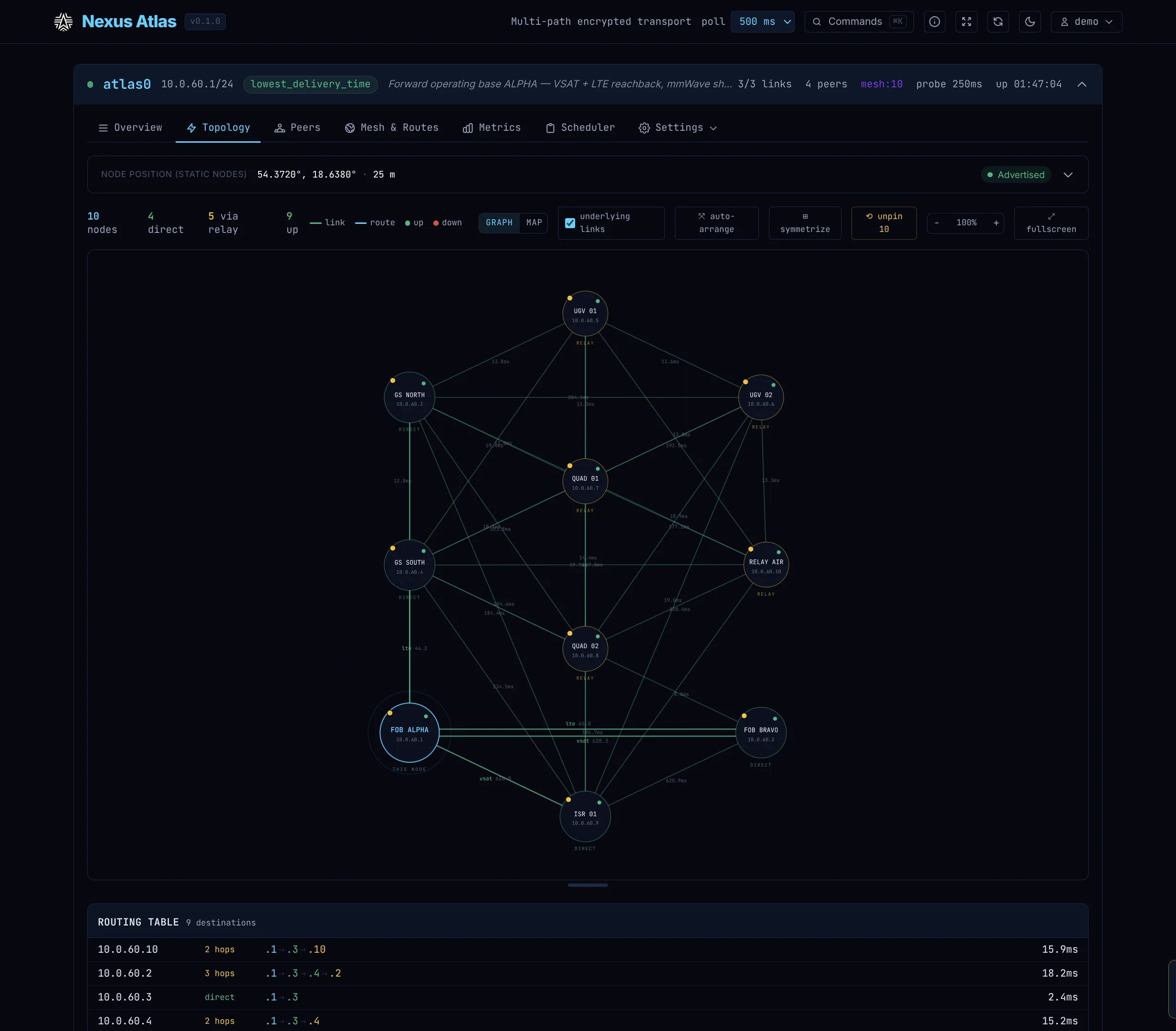
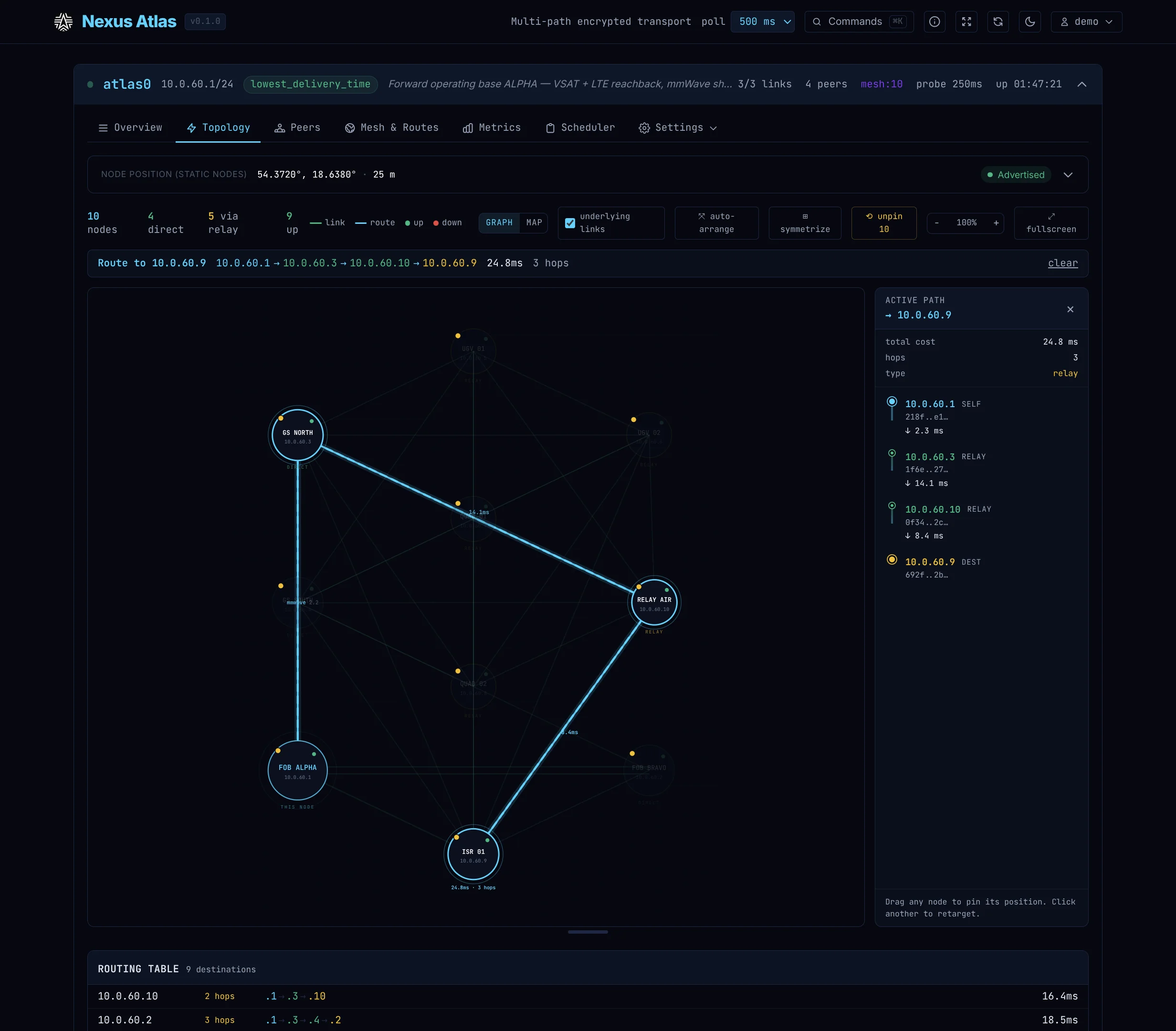
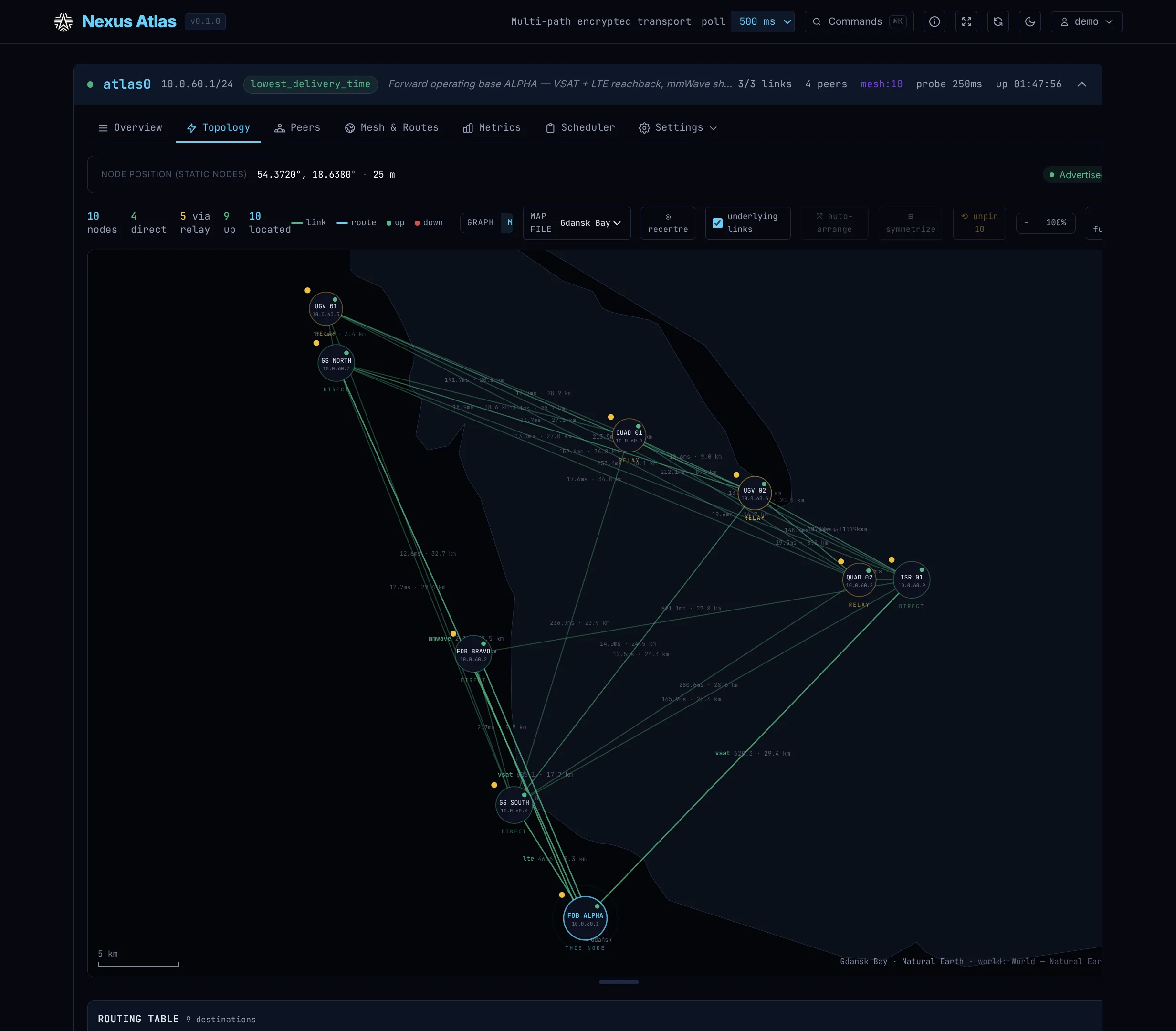
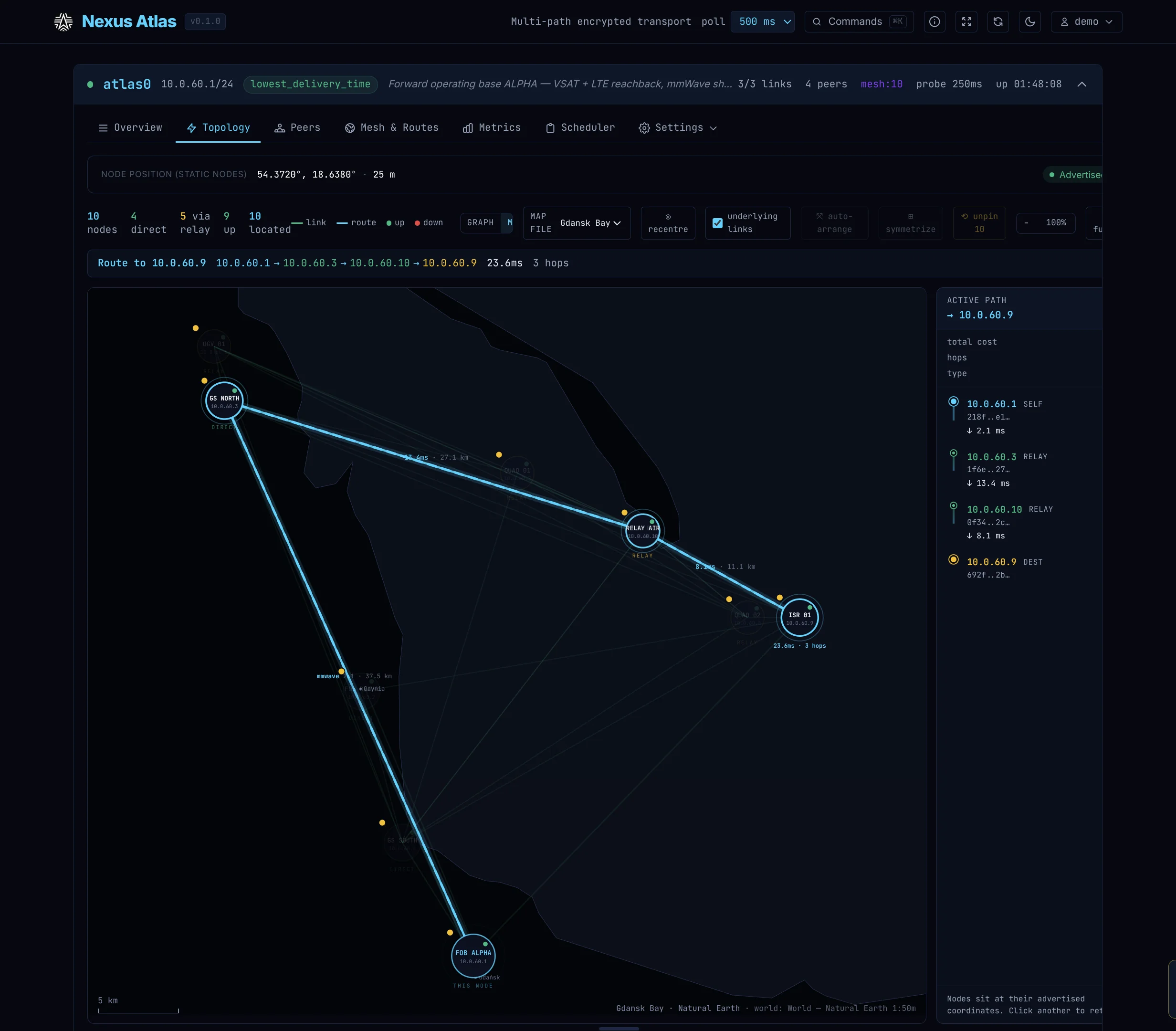
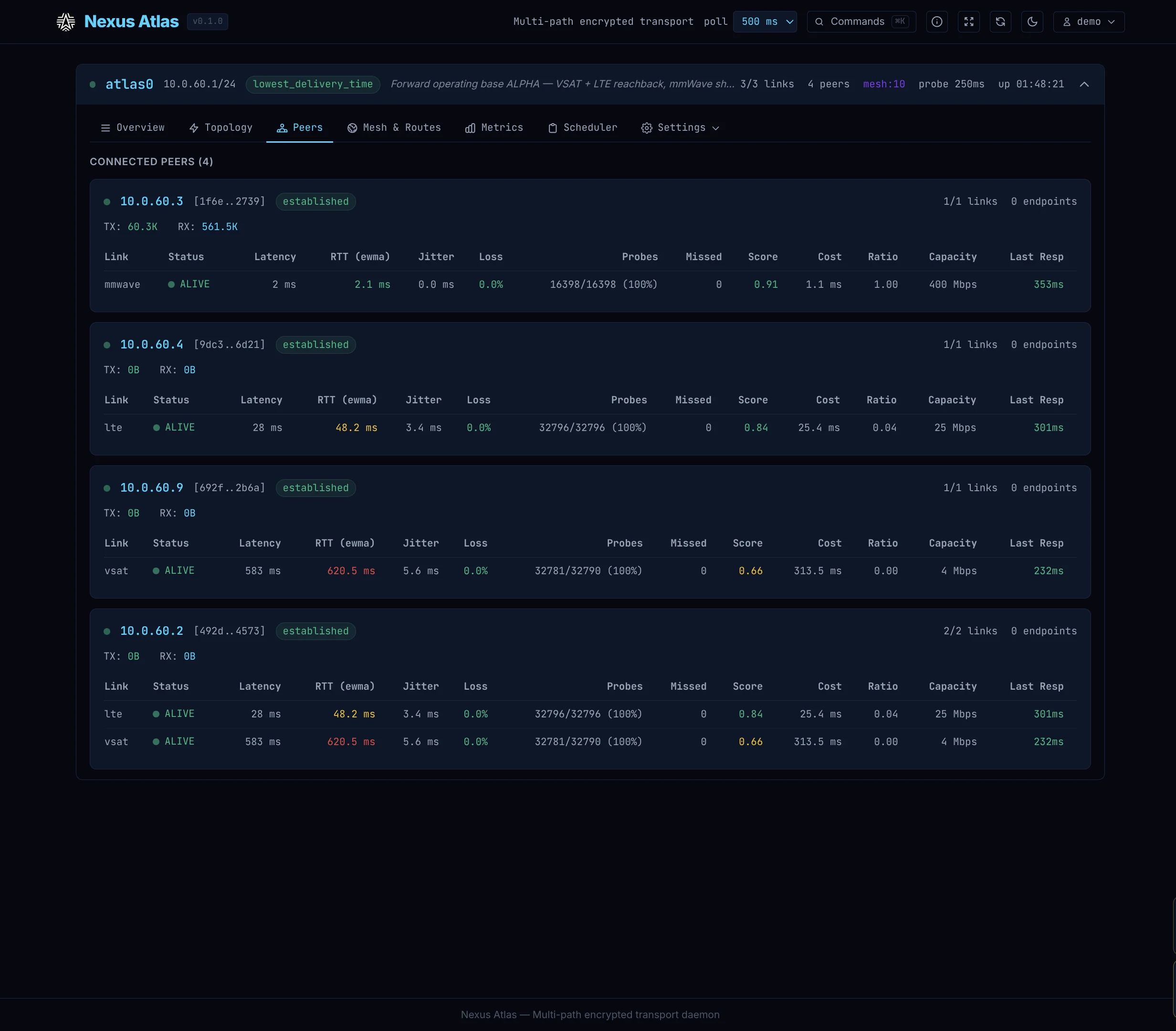
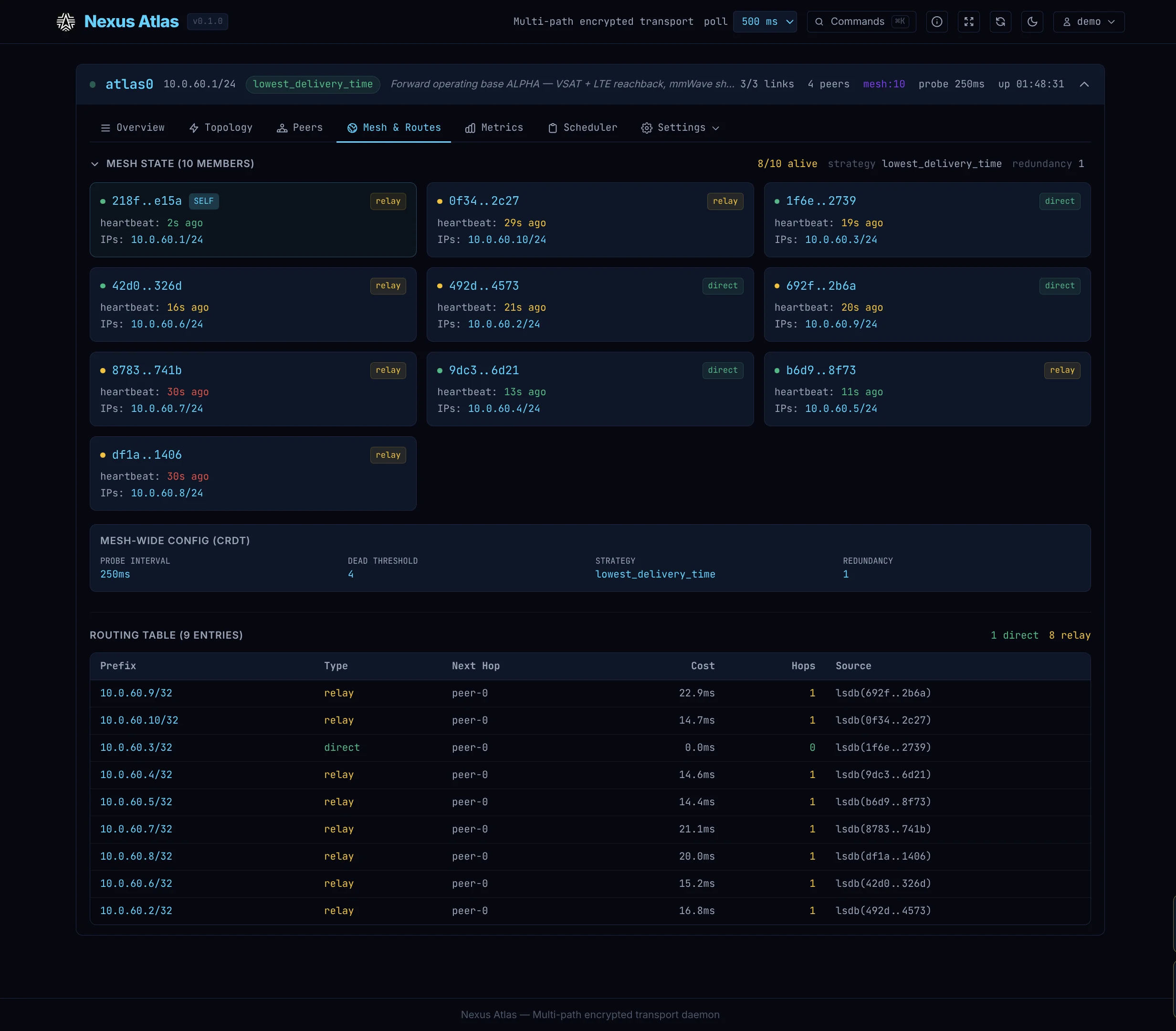
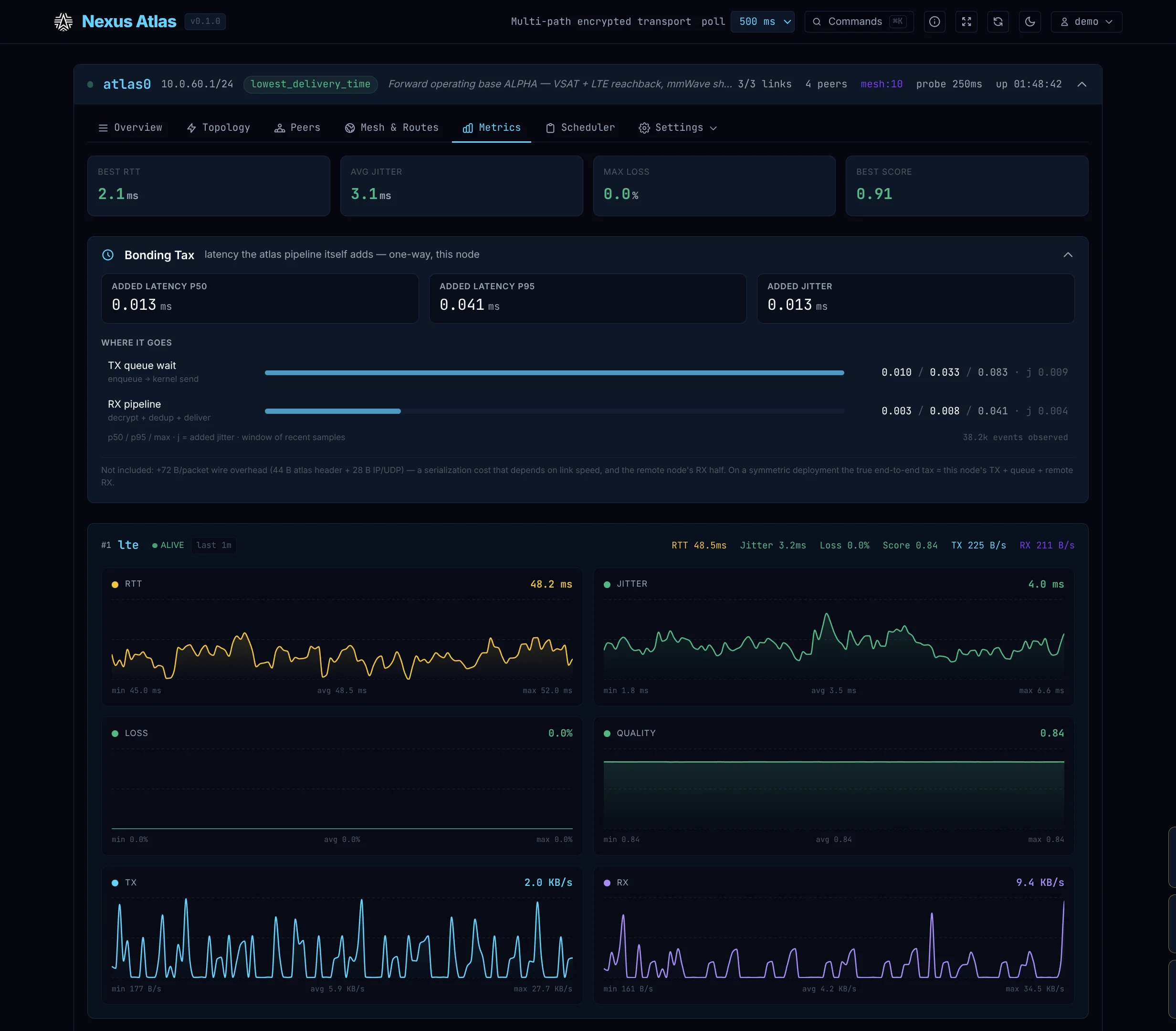
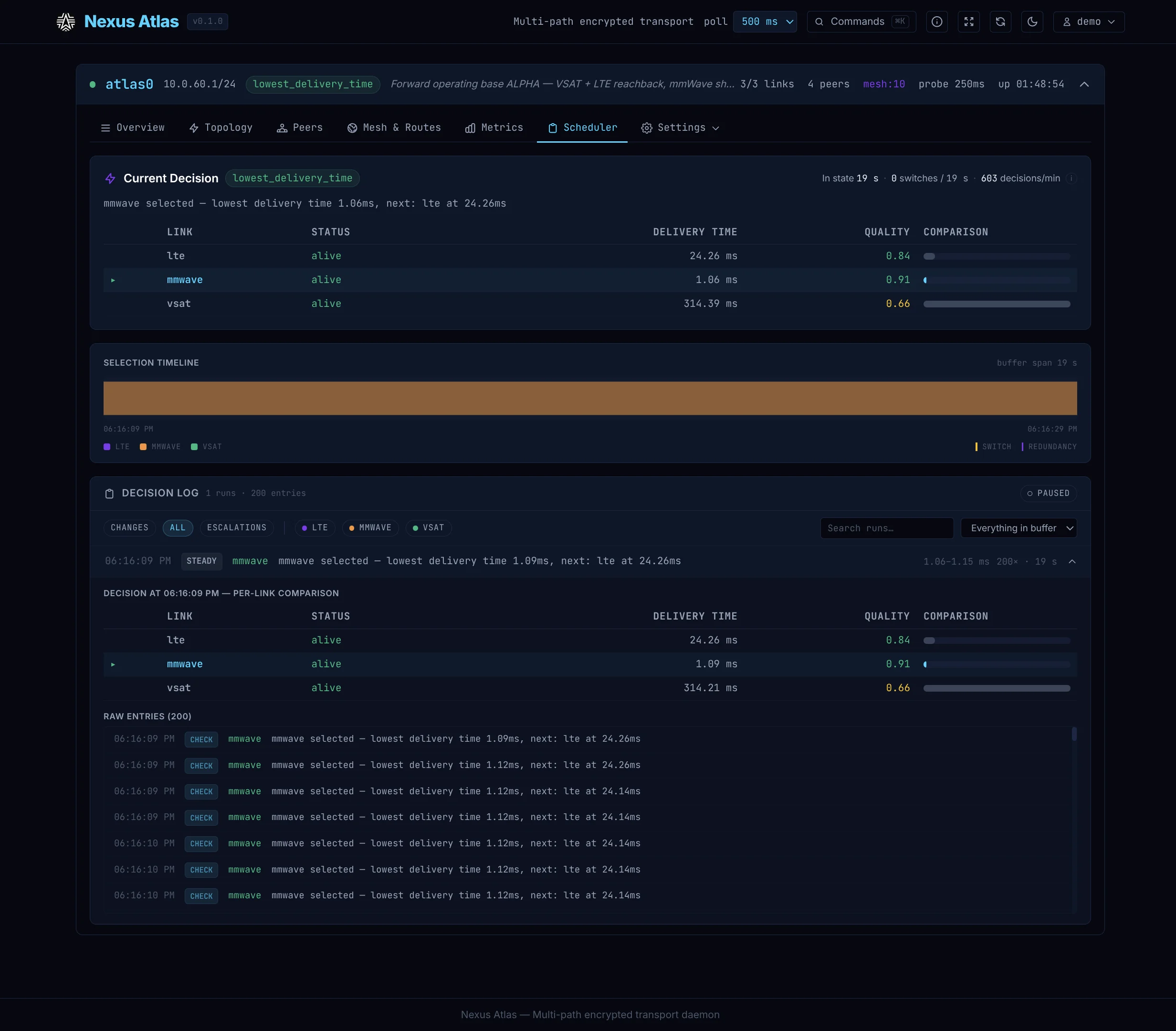
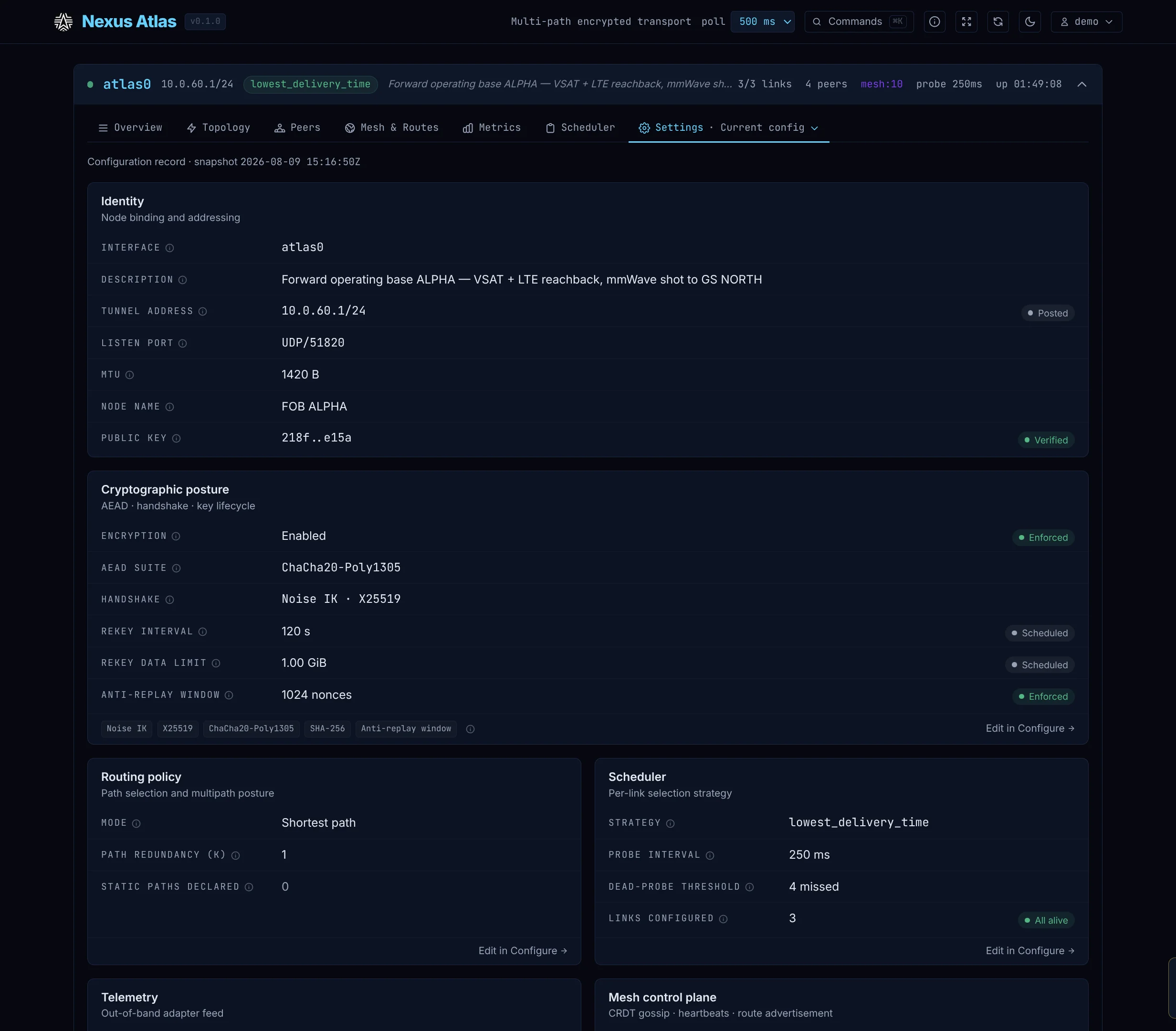
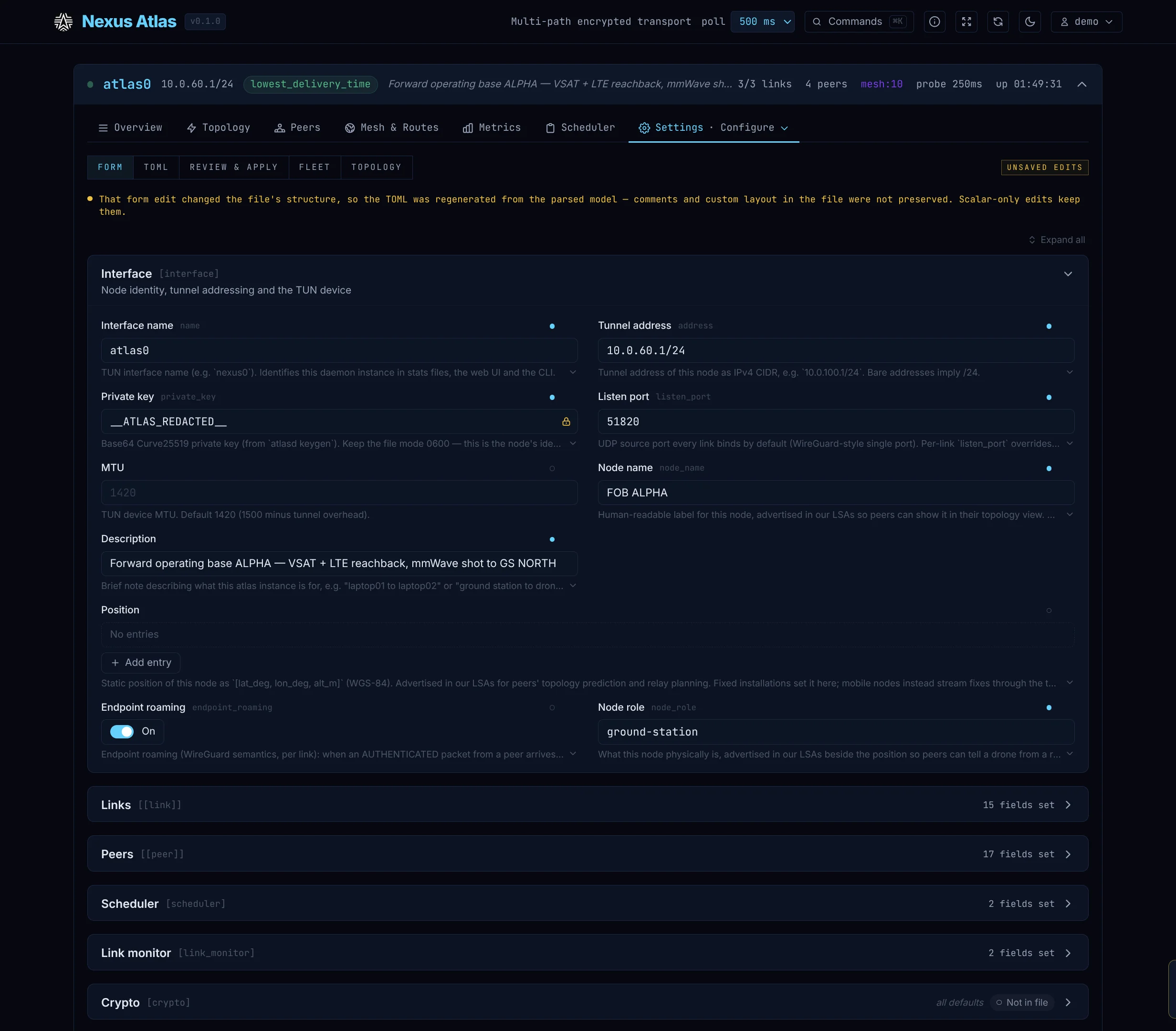
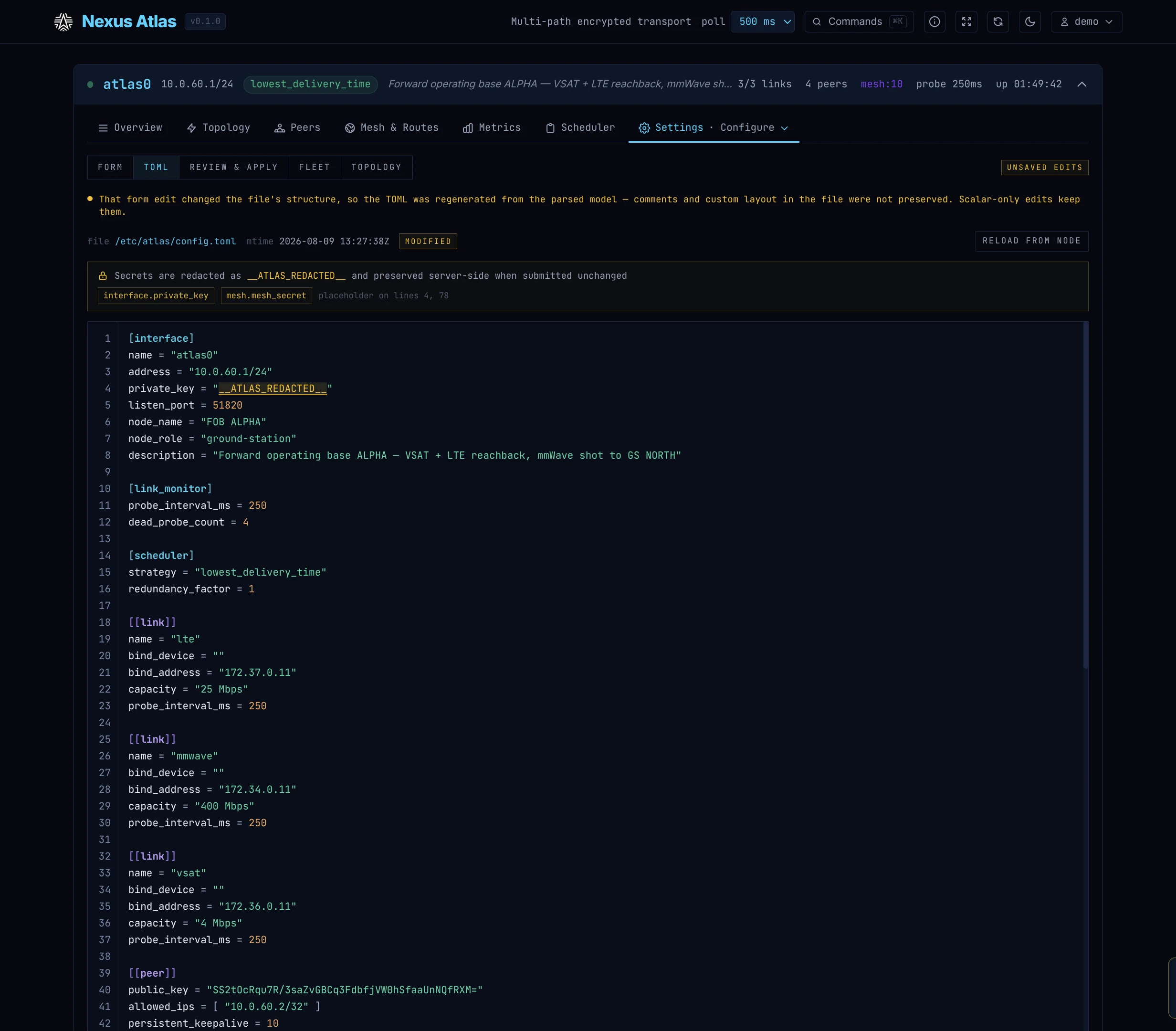
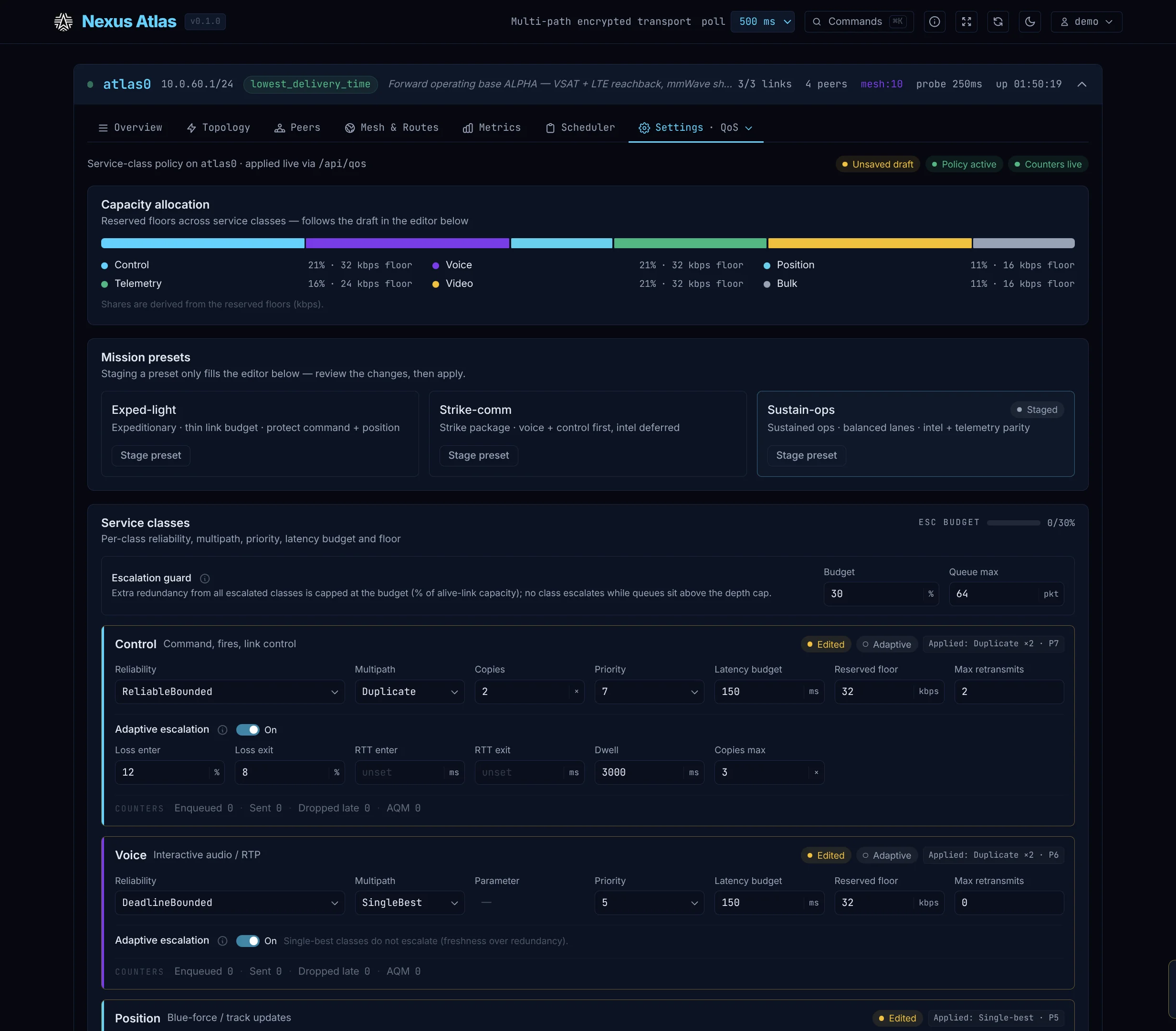
The dashboard end to end — every tab in one pass (3 min 26 s, silent).
Real device captures. Early implementation — evaluation builds, not yet in an app store.


Multi-tenant operations over the whole estate: enrolment a device proves cryptographically, nodes on a live map, per-link telemetry, offline alerts with recovery notices, and an audit trail — in light and dark, like everything else in the family.
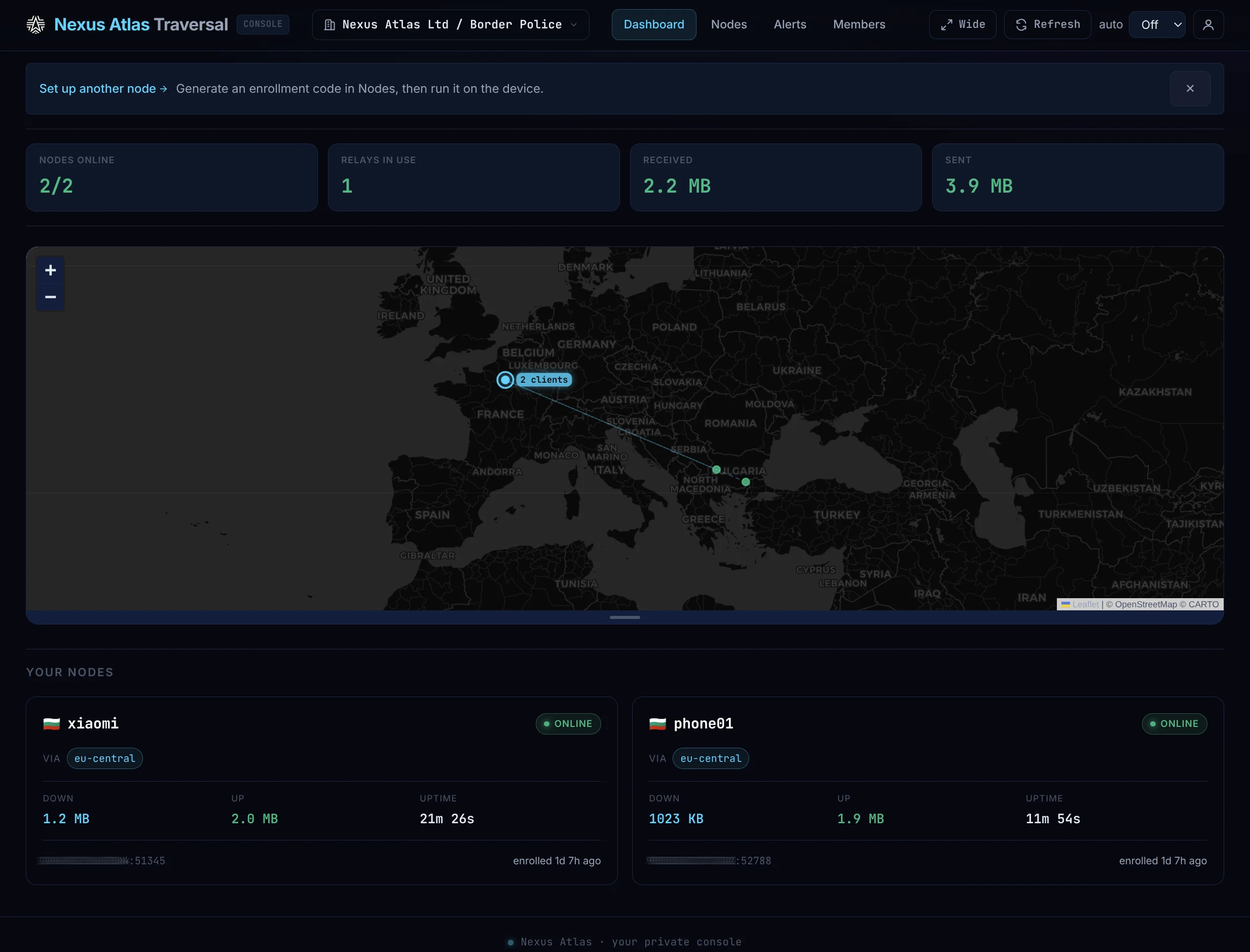
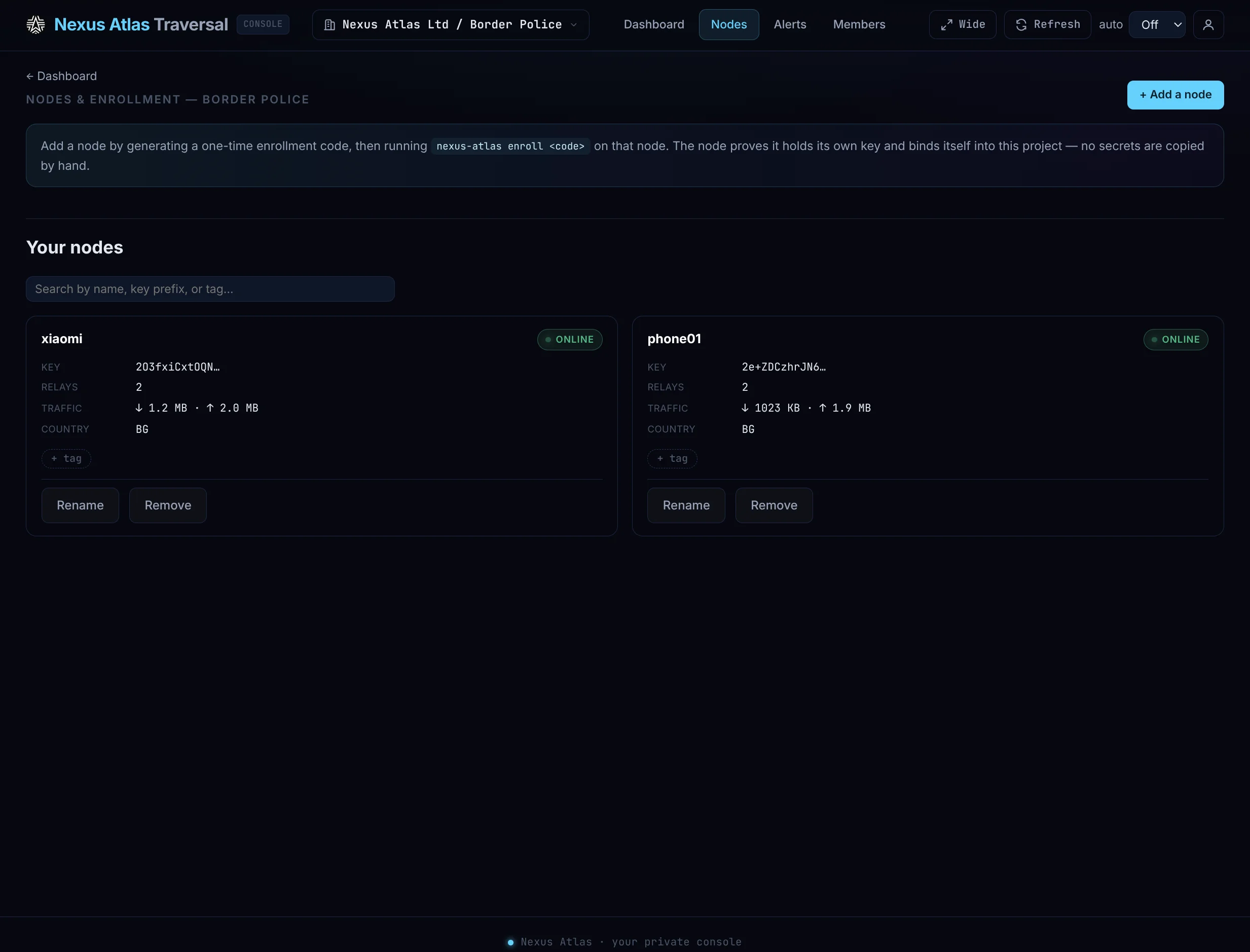
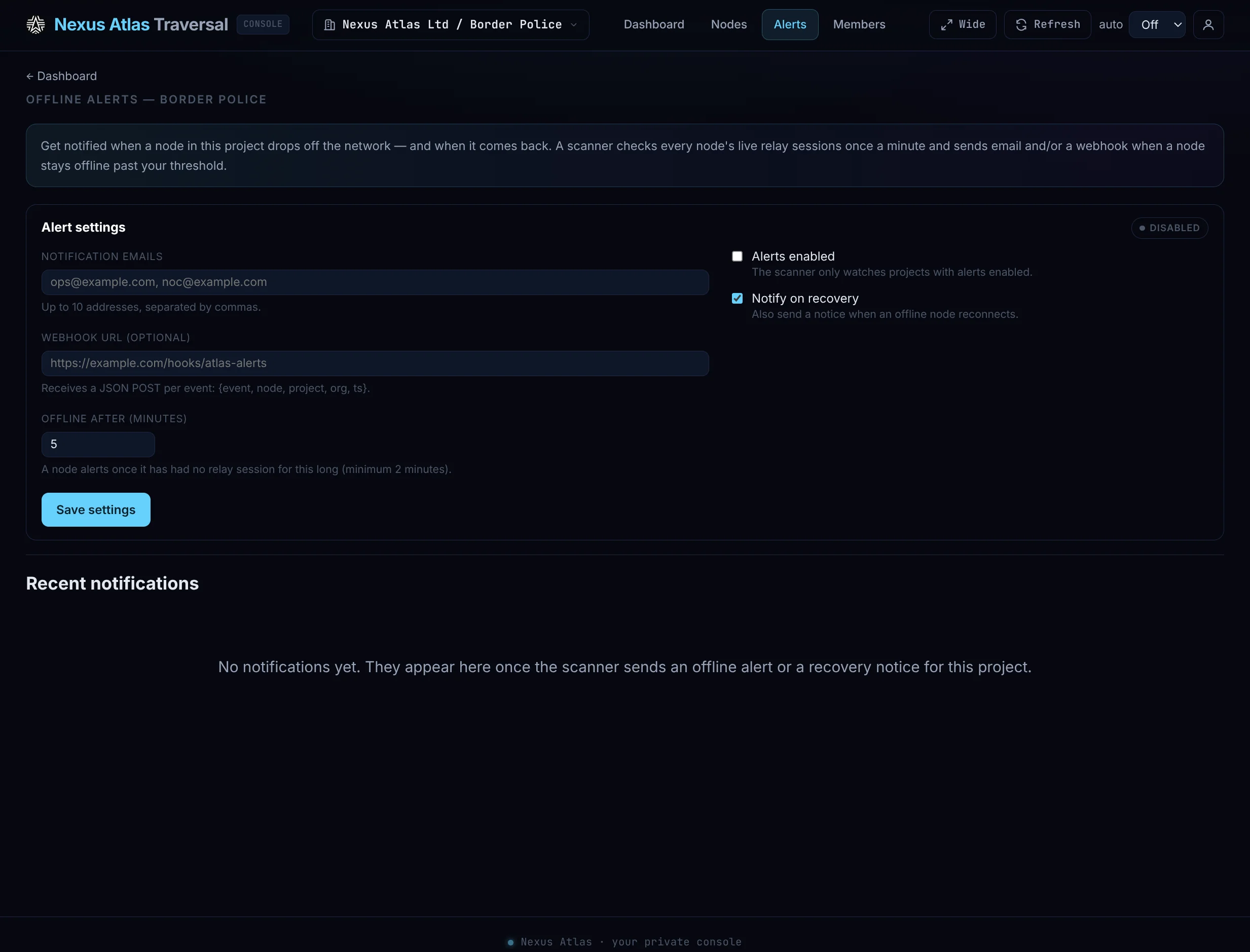
An external observer fed the same telemetry any mesh member already has: every node at its real position over elevation data, links coloured by terrain line-of-sight, and predictive reroutes drawn as they happen.
Atlas Sim — nodes, terrain line-of-sight and reroutes (1 min 8 s, silent).
Atlas bonds links; something still has to carry them. Mesh Map shows the 802.11s radio topology from any node’s browser — signal, airtime metric, links fading as they die, and hidden multi-hop nodes appearing. It shows the layer below Atlas, which is exactly why it exists.
Mesh Map — live 802.11s topology and link quality (50 s, silent).
An adapter is a small companion process that splits a radio’s byte stream into a data channel and a telemetry channel. The radio becomes a first-class link — with its own signal readings, its own declared capacity, and a place in the routing table beside Ethernet.
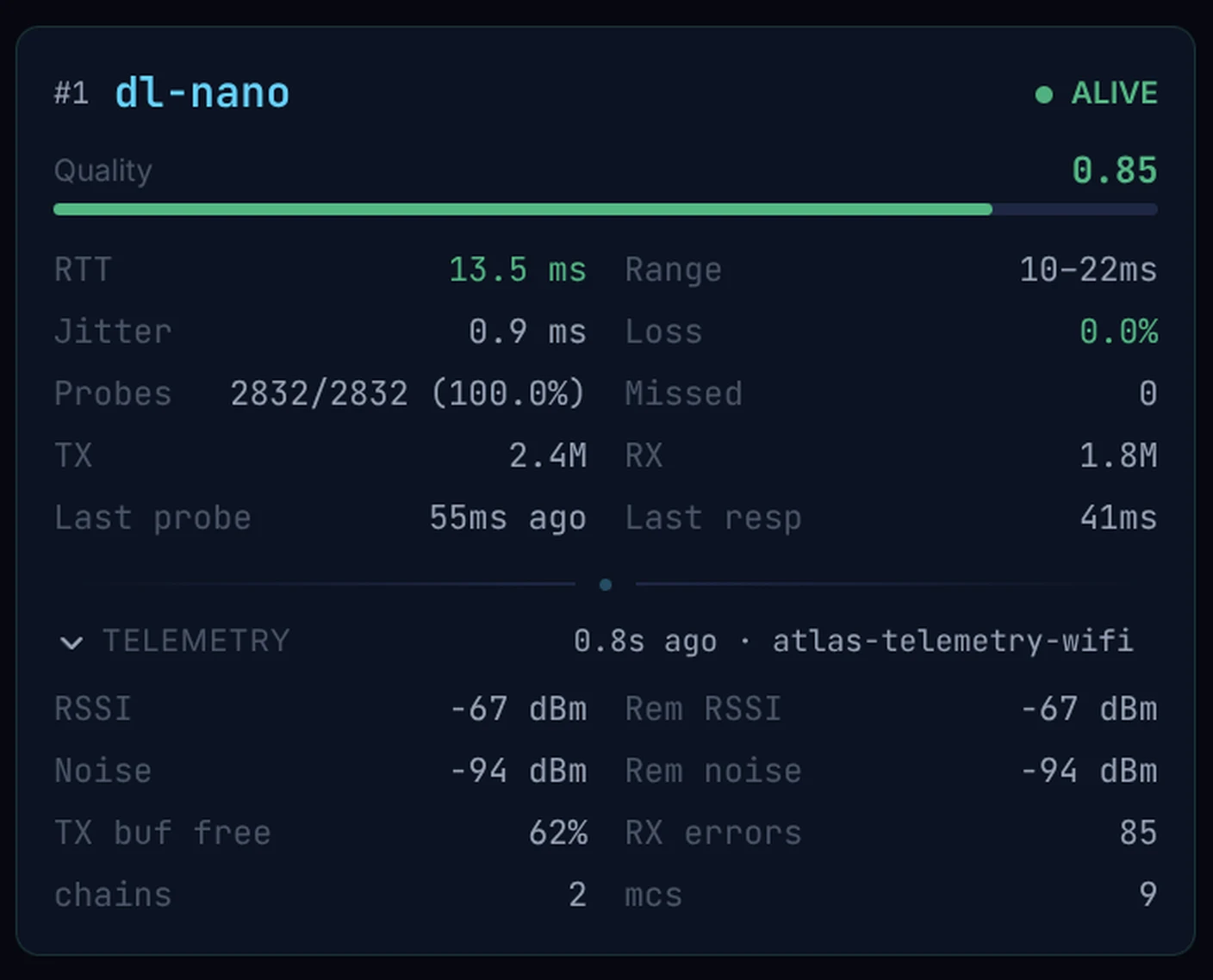
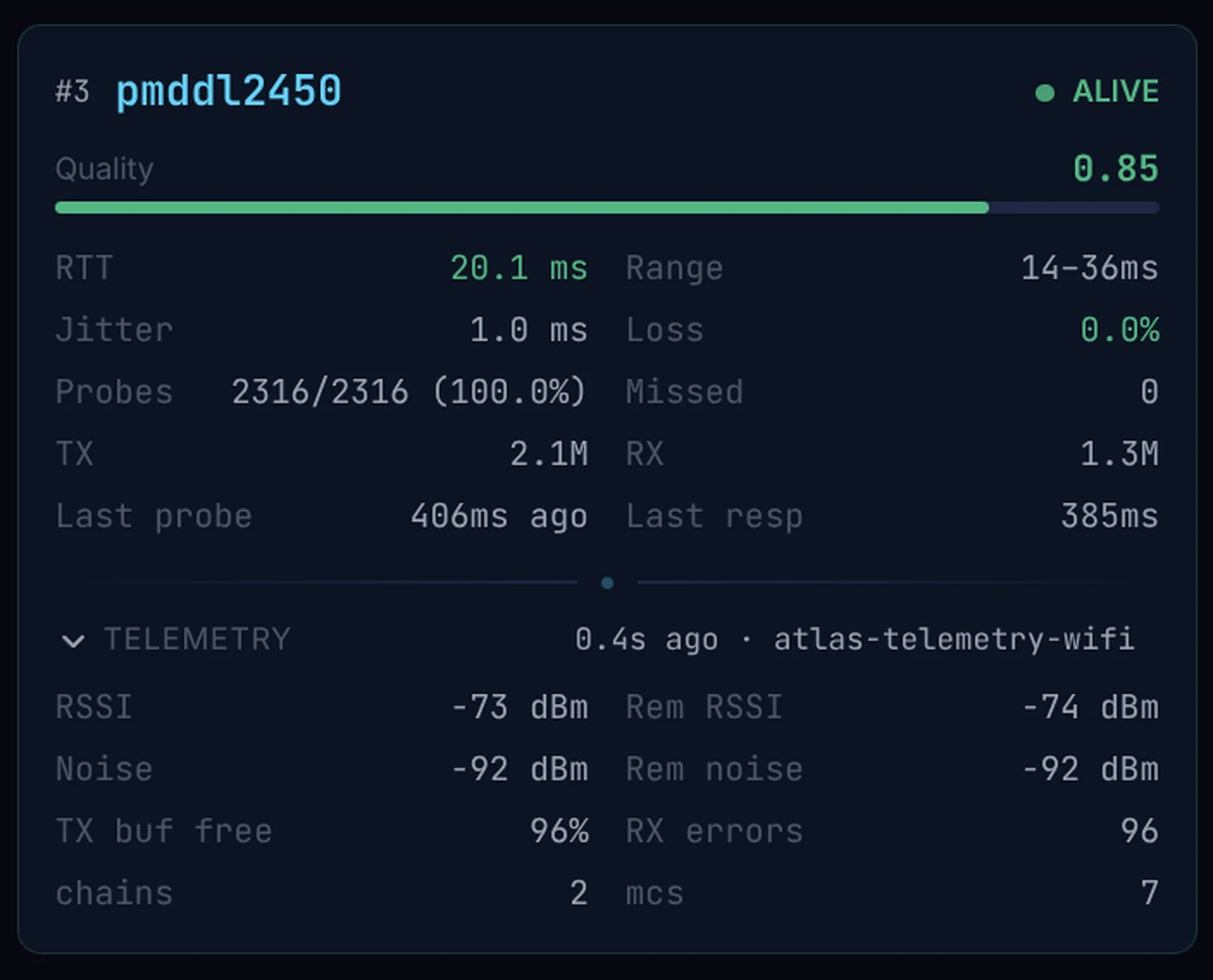
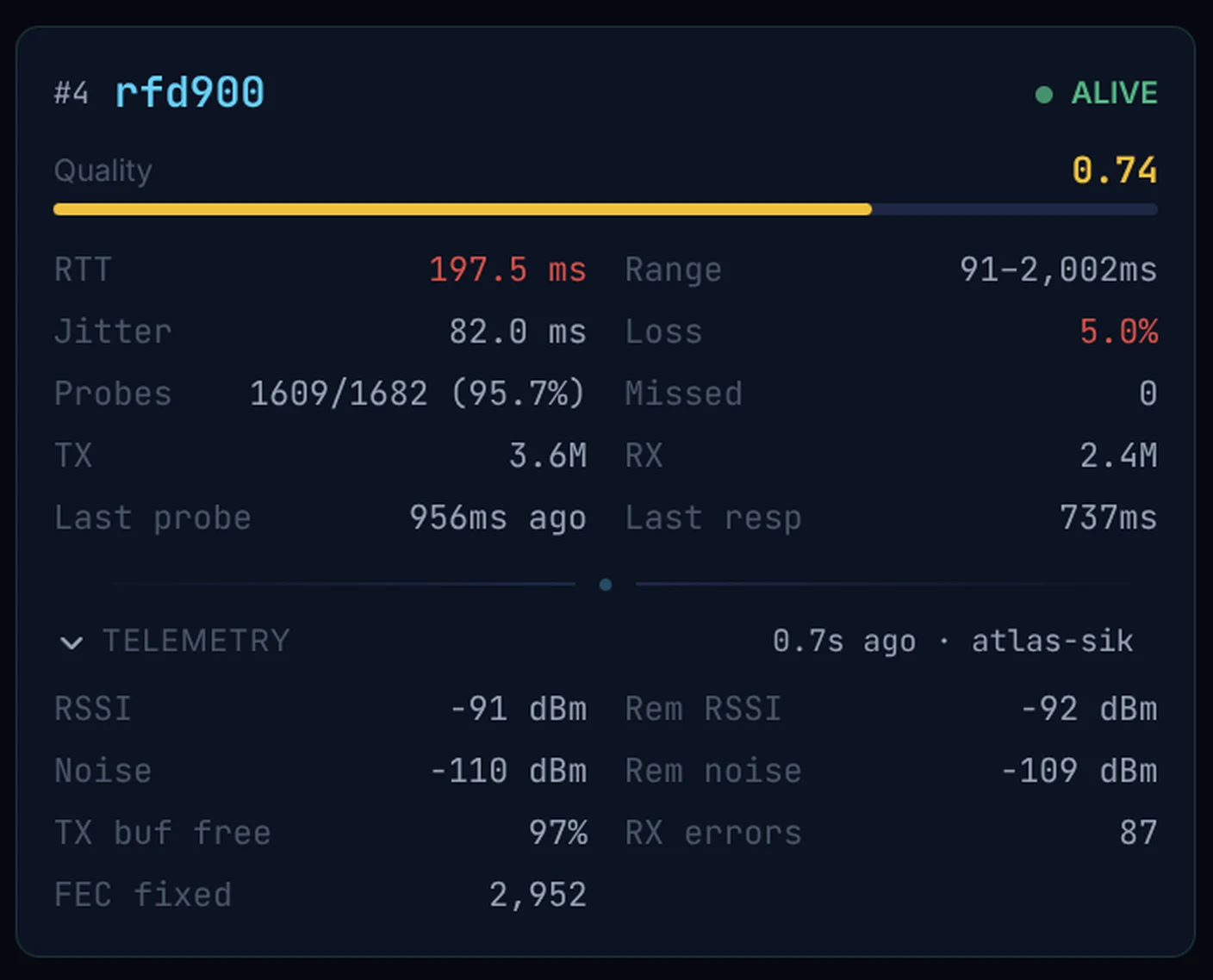
Three radios, three different stories, read the same way — and the same panel for Bluetooth, Wi-Fi ad-hoc, 802.11s mesh and Ethernet. Captured in dark theme only.
The case, the problems solved, the evidence, the engagement path. Written for decision makers; hands every technical question to the engineering site.
Architecture, live in-browser demonstrations — kill a link on the website itself — the transport deep-dive, and the field playbook essays in full operator depth. Open nexusatlas.io
The developer portal: the quickstart, concepts, the full configuration and API reference, release verification, and evaluation access for the engineers who make Atlas run on their platform. Open nexusatlas.dev
The managed reachability service: relay network, security model, live network view, private estates, pilot programme. Open nexusatlas.net
The customer console: enrolment, map, telemetry, alerts, teams, audit. Open the console
The application storefront: the Linux and Android interface tours, galleries, and evaluation-build requests. Open nexusatlas.app
We will map the links, vendors, shared failure domains and integration boundary—and define what a useful demonstration or pilot should prove.